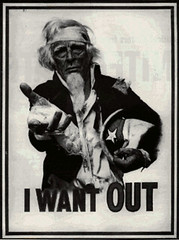
You give them a few weeks to grow.
They give them a chance at a forever home.
It's a good deal all round. Please consider fostering for your local shelter.
Friday, November 11, 2011


Thursday, November 03, 2011
Political CSI: Exhuming the Truth is a Never-Ending Forensic Job
Charts charts charts! Check these out, is from Business Insider(be sure to click through the link at the bottom):
And lest that not make the point clear enough, here's Mike Konczal at Rortybomb emphasizing the point that, no it wasn't the government forcing business to help the poor, the blacks, the Latinos, the dirty fucking hippies, the unwed mothers, or the non-college degreed that drove our economy into the toilet:
When's the last time the wealthy of this country made a point of going out and trying to help the government help poor people? Name five.
I rest my case.
And lest that not make the point clear enough, here's Mike Konczal at Rortybomb emphasizing the point that, no it wasn't the government forcing business to help the poor, the blacks, the Latinos, the dirty fucking hippies, the unwed mothers, or the non-college degreed that drove our economy into the toilet:
For fun, we should mention that the conservative think tanks spent the 2000s saying the exact opposite of what they are saying now, and the opposite of what Bloomberg said above. They argued that the CRA and the GSEs were getting in the way of getting risky subprime mortgages to risky subprime borrowers.That's right...the right-wing WANTED that poor people market! I've read a lot of essays arguing that Bloomberg is just ignorant and buying into the Koch/Scaife/Murdoch snake oil. I don't believe that for a heartbeat. No one as smart and educated as Bloomberg got where he was by buying other people's bullshit. He knows which story makes his ass smell fresher, and that story is the one saying his class didn't do anything wrong, except to try to help the government help poor people.
My personal favorite is Cato’s Should CRA Stand for “Community Redundancy Act?”, (2000, here’s a writeup by James Kwak), arguing a position amplified in Cato’s 2003 Handbook for Congress Financial Deregulation Chapter: “by increasing the costs to banks of doing business in distressed communities, the CRA makes banks likely to deny credit to marginal borrowers that would qualify for credit if costs were not so high.” Replace “marginal” with Bloomberg’s “on the cusp” and you get the idea.
Bill Black went through what AEI said about the GSEs during the 2000s here and it is the same thing – it was blocking subprime from being made. Peter Wallison, 2004: “In recent years, study after study has shown that Fannie Mae and Freddie Mac are failing to do even as much as banks and S&Ls in providing financing for affordable housing, including minority and low income housing.”
When's the last time the wealthy of this country made a point of going out and trying to help the government help poor people? Name five.
I rest my case.
Friday, October 28, 2011
There's Always Free Cheddar in a Mousetrap
Ah, hell, I give up.
It's amazing how many people post videos of dying mice. We don't have to wait for Hell. We've already made it, right here.
It's amazing how many people post videos of dying mice. We don't have to wait for Hell. We've already made it, right here.
More of That Liberal Agenda
In the cosmos of Planet Sulzberger, being anti-torture and anti-genocide equals "liberal values":
Taking this thinking to its logical conclusion necessarily requires us to assign mass murder, thought suppression, and torture to conservatism. Because no self-respecting conservative is going to find fault with whaling tear gas grenades and concussion grenades and rubber bullets at unarmed citizens exercising their right to peaceable assembly. At least I have yet to locate one.
Since the skirmish, which resulted in more than 100 arrests, several liberal groups — including Amnesty International — have condemned the use of tear gas as well as the actions of Mayor Jean Quan of Oakland, who said the measures were justified because protesters threw rocks.Yes, this is where we have landed--in a place where fighting to free people who've been jailed and persecuted for criticizing their murderous govenments is the equivalent of voting for Elizabeth Warren. #OWS has been painted as a liberal movement, so anyone or anything that appears to defend it is by extension also "liberal". This is a perfect exemplar of the knee-jerking modern journo, who works like mad to find a way to wedge every damn article in the universe into boxes labelled "left" or "right".
Taking this thinking to its logical conclusion necessarily requires us to assign mass murder, thought suppression, and torture to conservatism. Because no self-respecting conservative is going to find fault with whaling tear gas grenades and concussion grenades and rubber bullets at unarmed citizens exercising their right to peaceable assembly. At least I have yet to locate one.
Wednesday, October 26, 2011
One Step Closer to Small Gubmint
I was reading this nonsense in the NYTimes this morning:
Personhood, Personhood, Riding Through The Glen

see more Celeb Look-A-Likes
Of course, the difference is that no one is trying to pass legislation stipulating that Cookie Monster is a person.
A constitutional amendment facing voters in Mississippi on Nov. 8, and similar initiatives brewing in half a dozen other states including Florida and Ohio, would declare a fertilized human egg to be a legal person, effectively branding abortion and some forms of birth control as murder...That'll be good for the GDP. And it will have to be, because all those rubes are going to have to figure out where they're getting the money to pay for all the extra police and law enforcement actions it's going to take to monitor all those monthly cycles. If a woman has a drink and then a particularly heavy period, are they going to go into her garbage after the sanitary pads for forensic evidence of a homicidal miscarriage? It was only last February these small government types were rattling the same sword. It seemed so far away back then:
The amendment in Mississippi would ban virtually all abortions, including those resulting from rape or incest. It would bar some birth control methods, including IUDs and “morning-after pills” that prevent fertilized eggs from implanting in the uterus. It would also outlaw the destruction of embryos created in laboratories.
The amendment has been endorsed by candidates for governor from both major parties, and it appears likely to pass, said W. Martin Wiseman, director of the John C. Stennis Institute of Government at Mississippi State University. Legal challenges would surely follow, but even if the amendment is ultimately declared unconstitutional, it could disrupt vital care, critics say, and force years of costly court battles.
Personhood, Personhood, Riding Through The Glen
see more Celeb Look-A-Likes
Of course, the difference is that no one is trying to pass legislation stipulating that Cookie Monster is a person.
Monday, October 24, 2011
Turkeys and Some Mistletoe
Nothing else makes the Christmas season as magical as the Yuletide carols of campaign advertising and the candidates dressed up like Eskimos throwing mudballs in the snow:
Nevada today moved its caucus date back a month to Feb. 4, ending a cross-country power struggle with New Hampshire and paving the way for the Granite State to schedule its traditional first-in-the-nation primary in early January.Happy Holidays!
Nevada Republicans had originally scheduled their caucus for Jan. 14, infuriating New Hampshire officials, who said the date would throw the election calendar into chaos and force them to hold their primary in early December.
Saturday, October 22, 2011
'Tis the Season
As usual, the right wing's information on the origins of Halloween is as fact-based as the right wing's information on climate change.
BOO!
BOO!
Friday, October 21, 2011
New Depths Sounded in the Ocean of American Brutishness
The Joe Arpaio School of Economic Sadism is deeply influential across the southern states, and here's one more proof:
Thousands of other inmates in the Texas prison system have been eating fewer meals since April after officials stopped serving lunch on the weekends in some prisons as a way to cut food-service costs. About 23,000 inmates in 36 prisons are eating two meals a day on Saturdays and Sundays instead of three. A meal the system calls brunch is usually served between 5 and 7 a.m., followed by dinner between 4 and 6:30 p.m.Bravo, then. We'll have no bleeding hearts whining about taking away the privileges of bad guys, like food and sanitation and mobility. We'll have more of this guy, this Democrat:
The meal reductions are part of an effort to trim $2.8 million in food-related expenses from the 2011 fiscal year budget of the Texas Department of Criminal Justice, the state prison agency...
Prison administrators said that the cuts were made in response to the state’s multibillion-dollar budget shortfall in 2011, and that the weekend lunches were eliminated in consultation with the agency’s health officials and dietitians...
Ohio and Arizona serve two meals per day on the weekends to reduce food-service costs. Georgia serves two meals per day on Friday, Saturday and Sunday, though inmates on work details receive a third meal.
State Senator John Whitmire, a Democrat and chairman of the Senate Criminal Justice Committee whose outrage over last meals on death row led to the end of the practice last month, said the reductions were not a major concern to him. “If they don’t like the menu,” he said, “don’t come there in the first place.”You know what else we could do to save the taxpayers money? Shoot people between the eyes as soon as a court finds them guilty. Then we wouldn't even have to feed them! And we could charge their relatives for the bullet, the removal, and the dumping fee. If they don't like it, well, they shouldn't be related to shoplifters in the first place!
Even Cattle Can Have A Change of Heart on the Ramp to the Killing Floor
Lewis Lapham on America's cultivated fear of the future:
The collapse of the World Trade Center in the fall of September 2001 destroyed the last trace elements of the American future conceived as a nostalgic rerun of the way things were in the good old days when John Wayne was securing the nation’s frontiers and Franklin D. Roosevelt was watching over its soul. The loss of the utopian romance that had once supported both the ambition of the state and the strength of the economy was terrible to behold. So terrible that it has been replaced by an apparition—Gorgon-headed and dragon-winged—that reduces its beholders to paralyzed stone. Much of the effect I attribute to the Bush administration’s war on terror, which was lost on the day it was declared. Lost because, to wage the war, the Bush administration was obliged to manufacture, distribute, and magnify the reflection of its own ignorance and fear. Nobody’s cell phone to be left untapped, a jihadist in every rose garden.That knowledge that the future is ours to create has been as carefully bred out of us by our politicians and media as viciousness has been bred out of cattle by husbandmen of centuries past. Maybe the real reason behind the #OWS revolt is that there is still a spark of that old innate wisdom left in us.
In the years since the invasions of Iraq and Afghanistan, the palsied dysfunction has become more pronounced. The foreign wars haven’t been going according to plan; the domestic financial markets have suffered calamitous reversals of fortune; the sum of the national debt goes nowhere but up. The public parks bloom with the installations of surveillance cameras; the inspections at the airports maintain the national quota of patriotic dread, introduce the frequent flyer to the game of playing dead.
Among the country’s stupefied elites, the bad news induces the wish to make time stand still, to punish the presumption of a future that presents itself as a bill collector. As self-pitying as Shakespeare’s melancholy king, they sit upon the ground and tell sad stories of the death of money. Without it the future doesn’t bear contemplating, doesn’t include their presence in it and therefore doesn’t exist. How then can the banks be expected to lend money, the government to build hospitals and schools, the rich to pay taxes for comforts not their own? The suggestion is outrageous, an intolerable effrontery, out of line with the all-American revelation that the name of the game is selfishness. The surplus of resentment affords the excuses to do nothing and bids up the market in transcendence. Politicians in Congress stand around like trees in a petrified forest, or, if allied with the zeal of the Tea Party, console themselves with notions of biblical vengeance, the wrecking of any such thing as a common good a consummation devoutly to be wished. Secure in the knowledge that only the wicked shall perish, they press forward to the Day of Judgment when the host of the damned—variously identified over the course of the centuries as false priests, proud barons, profiteering capitalists, vile communists, and godless democrats—shall fall into the hands of an angry god and gnaw their tongues in anguish.
The last-named beneficiary accounts for the media’s preoccupation with what some of our less well-informed critics still insist on deploring as “the bad news.” They miss the point. The bad news is the carnival-barking spiel that sells the good news, which are the advertisements. First, at the top of the network hour, the admonitory row of corpses being loaded into ambulances in Brooklyn or cleared from the streets of Islamabad; second, an inferno of fires burning in California, of bombs exploding in Libya; third, a muster of criminals, political, financial, and sexual, shuffling offstage in chains. The fear of a deadly tomorrow having thus been firmly established, the camera makes its happy return to the always-smiling anchorwoman, and so, with a gracious waving of her snow-white hand, to the previews of salvation sponsored by Jet Blue, Pfizer, and Mercedes-Benz. The lesson is as plain as a medieval morality play. Obey the law, pay your taxes, speak politely to the police officer, and you go to the Virgin Islands on the American Express card. Disobey the law, neglect your mortgage payments, speak rudely to the police, and you go to Kings County Hospital in a body bag...
Always careless about keeping appointments, the barbarians at the gate tend to show up fifty years sooner than anybody expects or six months after the emperor has fled. They depend for their victories on the fear and trembling enthroned within the walls of the city, and it doesn’t make much difference whether they come armed with slingshots and spears or with subprime loans and credit-default swaps. The waiting around for their arrival is the bait and switch alluded to both by the poet C. P. Cavafy and by the Stoic philosopher Seneca, who asks “whether anything can be more idiotic” than the directing of one’s purposes “with an eye to a distant future.” The doing so suspends the will to think, saps the courage to act...
The future is a work in progress, something made instead of something lost or bought or found. We have little else with which to make it except time-past revised and reconstituted in the present—as close at hand as the next sentence on a new page, no further away than around the corner or across the street.
Thursday, October 20, 2011
The Southern Cross Is Bending--No Matter How Geological The Time Frame, It Is Bending
Eugene Debs died today, away back in 1926. As The Daily Bleed said:
1926 -- US: Good Ol'Days? Labor activist, anti-militarist & socialist Eugene Debs dies. His "radical" reforms included an eight-hour workday, pensions, workman's compensation, sick leave, social security — commonplace today. Ran for president from his jail cell. [Seems to us it's the elected ones should be ensconced in the hoosegow.]Here are some of the recipients (partial list) of the Eugene V. Debs Award Program:
"We [propose] to destroy the capitalist & save the man. We want a system in which the worker shall get what he produces & the capitalist shall produce what he gets."
— speech, December 10, 1905
1965 John L. LewisFrom his Statement to the Court, on his conviction of violating the Sedition Act for opposing WWI:
1968 Walter Reuther
1972 Dorothy Day
1974 Arthur Schlesinger
1978 Jesse Jackson
1979 Pete Seeger
1981 Kurt Vonnegut, Jr.
1982 Coretta Scott King
1983 Studs Terkel
1987 Edward Asner
1991 John Sayles
1992 Ralph Nader
1994 Richard Trumka
1995 Jim Hightower
1998 Howard Zinn
2002 Julian Bond
2003 Molly Ivins
2005 Thomas Frank
2007 Barbara Ehrenreich
I could have been in Congress long ago. I have preferred to go to prison.
I am thinking this morning of the men in the mills and the factories; of the men in the mines and on the railroads. I am thinking of the women who for a paltry wage are compelled to work out their barren lives; of the little children who in this system are robbed of their childhood and in their tender years are seized in the remorseless grasp of Mammon and forced into the industrial dungeons, there to feed the monster machines while they themselves are being starved and stunted, body and soul. I see them dwarfed and diseased and their little lives broken and blasted because in this high noon of Christian civilization money is still so much more important than the flesh and blood of childhood. In very truth gold is god today and rules with pitiless sway in the affairs of men...
I am opposing a social order in which it is possible for one man who does absolutely nothing that is useful to amass a fortune of hundreds of millions of dollars, while millions of men and women who work all the days of their lives secure barely enough for a wretched existence...
Your Honor, I ask no mercy and I plead for no immunity. I realize that finally the right must prevail. I never so clearly comprehended as now the great struggle between the powers of greed and exploitation on the one hand and upon the other the rising hosts of industrial freedom and social justice.
I can see the dawn of the better day for humanity. The people are awakening. In due time they will and must come to their own.
When the mariner, sailing over tropic seas, looks for relief from his weary watch, he turns his eyes toward the southern cross, burning luridly above the tempest-vexed ocean. As the midnight approaches, the southern cross begins to bend, the whirling worlds change their places, and with starry finger-points the Almighty marks the passage of time upon the dial of the universe, and though no bell may beat the glad tidings, the lookout knows that the midnight is passing and that relief and rest are close at hand. Let the people everywhere take heart of hope, for the cross is bending, the midnight is passing, and joy cometh with the morning.
Sunday, October 16, 2011
Another Fine Mess
This is why the loss of the Fairness Doctrine was no joke. That Reagan-engineered surgical strike single-handedly gave us the Murdoch media empire, Fox News, and the capture of U.S. broadcasting by hate radio, none of which could exist in their current virulent incarnations today if they were required to ensure diversity of opinion on the air. There are a lot of walk-backs that need to be made to rescue the country from its headlong plunge into feudalism, and I know its not popular among liberals, but restoring the Fairness Doctrine could be the most powerful blow of all.
How to Help Occupy Philadelphia
Yesterday we bought a ton of food, cleaning aids, and hygiene products for the folks at Occupy Philadelphia and dropped them off after the march. The Plaza looked really good. Looks like they recovered well from the onslaught of homeless that unexpectedly put added strain on the encampment. Of course, instead of stepping up and taking care of the homeless that descended on City Hall, the city was happy to let the protesters deal with it, which is just business as usual from a city that can give millions in subsidies and tax breaks to businesses but can't open new shelters or maintain properly the ones they have.
Their Facebook page has suggestions for donations that can be brought directly to the northwest side of Dilworth Plaza, City Hall, if the goods are toiletries, camping-type supplies, or ready-to-eat. Food that has to be prepared and kitchen supplies should be taken to the Friends Center on the Cherry Street side. You'll see a gate, and can enter with your goods through there, then up the ramp and to the right.
They are also calling for volunteers to work in the kitchen and at the Plaza when and where people can. And of course, if you can get there and set up a tent for yourself, even if only for a day or two for the solidarity of it, they will welcome you.
But what will happen when the long-planned renovations to the Plaza begin in November? The Christkindlmarkt was set up there in past seasons, but because of the construction this year it will be in Love Park instead. Where will the protesters go then?
Their Facebook page has suggestions for donations that can be brought directly to the northwest side of Dilworth Plaza, City Hall, if the goods are toiletries, camping-type supplies, or ready-to-eat. Food that has to be prepared and kitchen supplies should be taken to the Friends Center on the Cherry Street side. You'll see a gate, and can enter with your goods through there, then up the ramp and to the right.
They are also calling for volunteers to work in the kitchen and at the Plaza when and where people can. And of course, if you can get there and set up a tent for yourself, even if only for a day or two for the solidarity of it, they will welcome you.
But what will happen when the long-planned renovations to the Plaza begin in November? The Christkindlmarkt was set up there in past seasons, but because of the construction this year it will be in Love Park instead. Where will the protesters go then?
Saturday, October 15, 2011
The Dog-Torturer-in-Chief
Even when all my friends were sweating the Second Coming of Rick Perry and positive he was going to be the next President, I felt certain he wasn't our problem. Nor do I fear that Old Extra Pepperoni is going to be on the radar come fall. My biggest concern from day one was Romney, and it continues to be. The feudal lords of the Colonies have had their fun with the Bircherite fringe, and have gotten their money's worth out of them and the reliable plants in the Supreme Court, but now it's time to hunker down and pull out the serious weaponry, because all that extremist talk is fine when you're dog-whistling to the booboisie, but now you have to appeal to a whole broad array of people, and a lot of them don't even look like you. After winning the primary, Romney can hang a louie and start behaving like a grown man again, and besides, he's one of the Landlords of America--the Chamber of Commerce knows he's as good as any FIRE sector CEO they could plant.
So I hope to see a lot of people reminding the public next year that this is a guy who could do this to a dog:
So I hope to see a lot of people reminding the public next year that this is a guy who could do this to a dog:
The incident: dog excrement found on the roof and windows of the Romney station wagon. How it got there: Romney strapped a dog carrier — with the family dog Seamus, an Irish Setter, in it — to the roof of the family station wagon for a twelve hour drive from Boston to Ontario, which the family apparently completed, despite Seamus's rather visceral protest.Remeber? Now, if a man could do that to the family dog--a happy creature that one may safely assume he knows well and purports to love--what do you think he may be capable of once elected President, with regard to the minions under his gaze? Here's a clue:
Romney, of course, has expressed support for the use of "enhanced interrogation" techniques when it comes to terrorists; his campaign refused to comment about the treatment of his dog.He then went on to tell CNN how much old Seamus liked "fresh air". And yes, this is a person who expressed shame at having helped saved the lives of the poor and sick with statewide health insurance coverage. I think Charles Koch has his man.
Friday, October 14, 2011
THIS is What's the Matter With Kansas
Even Scientific American is paying attention to #OWS. In a recent article subtitled "The surprising psychology of the Occupy Wall Street protests", we read that the phenomenon the rest of us know as "crabs in a barrel" has been identified by Princeton researchers as the "last place aversion" paradox. In other words, if you're near the bottom, you don't want to see someone poorer than you get a break if it means they will catch up to you economically. They explain:
The authors end with this:
You can read the study by the authors here.
Our recent research suggests that, far from being surprised that many working-class individuals would oppose (income) redistribution, we might actually expect their opposition to rise during times of turmoil – despite the fact that redistribution appears to be in their economic interest. Our work suggests that people exhibit a fundamental loathing for being near or in last place – what we call “last place aversion.” This fear can lead people near the bottom of the income distribution to oppose redistribution because it might allow people at the very bottom to catch up with them or even leapfrog past them.Bolding is mine. That's the key takeaway: that the sense of security and self-worth of the people close to the bottom is so fragile that having no one left to look down on is the ultimate insufferable indignity. This really isn't new news. It was always the chief motivater of poor Southern whites who persecuted blacks during the Jim Crow and Civil Rights eras. Taken to its ultimate deadly conclusion, it distracts the downtrodden from their true enemies--those who keep them on an economic knife edge--and makes them accessories to campaigns of genocide.
The authors end with this:
We’ve also found evidence of last place aversion in laboratory experiments. In one, we created an artificial income distribution by endowing individuals with different sums of money and showing them their “rank”– with each rank separated by $1. We then gave them an additional $2, which they had to give to either the person directly below or directly above them in the distribution. In this income distribution, of course, giving $2 to the person below you means he will jump ahead of you in rank. In our experiments, most people still give to the person below them – after all, the alternative is to give $2 to a person who already has more money than you. People in second-to-last place, however, who would fall to last place when giving the money to the person below them, are the least likely to do so: so strong is their desire to avoid last place that they choose to give the money to a wealthier person (the person above them) nearly half the time. If Americans behave like people in our experiments, then it could be challenging to unite those in the bottom of the income distribution to support redistribution.Again, the bolding is mine. It really brings into focus the habit amongst the American working class of giving passes to the wealthy while seeking to stick it to the poor, doesn't it?
You can read the study by the authors here.
Wednesday, October 05, 2011
Saturday, October 01, 2011
Remember That It Was The Little Guys That Prevailed
Belong to one of the big banks that are about to (yet again) squeeze you for accessing and using your own money? The best part is that some, like HSBC and TD Bank, are not only planning to charge you a fee to use one of their own ATMs, they are also going to charge you for using a competitor's ATM, which means, of course, you will be charged twice: once by the competitor for using a "foreign" ATM, and once by your own dear bank for philandering around. Depending on the charges, that could result in more than $5.00 a shot just to pull out a yuppie food stamp. Did I mention that it was your own money?
Well, believe it or not there are other banks. There are even other banks that give you excellent customer service, look out for your interests, don't gouge you just because they can, and make it cheaper and easier to buy cars and houses. They are community banks and credit unions. And as the customer of the latter for 16 years, I can tell you that I love and cherish my bank over diamonds and rubies. You can get out from under these crooks.
You can find information on credit unions and how to locate one near you here.
You can find info on a new concept in banking called BankSimple here.
And the Move Your Money Project can help you find small community banks and credit unions, along with lots of good advice.
You don't have to suck this up and take it. Fuck them. Small banking is the wave of the future. And once these dinosaurs fall under their own weight, we'll need the solid support and reliability of the little mammals still standing afterwards.
Well, believe it or not there are other banks. There are even other banks that give you excellent customer service, look out for your interests, don't gouge you just because they can, and make it cheaper and easier to buy cars and houses. They are community banks and credit unions. And as the customer of the latter for 16 years, I can tell you that I love and cherish my bank over diamonds and rubies. You can get out from under these crooks.
You can find information on credit unions and how to locate one near you here.
You can find info on a new concept in banking called BankSimple here.
And the Move Your Money Project can help you find small community banks and credit unions, along with lots of good advice.
You don't have to suck this up and take it. Fuck them. Small banking is the wave of the future. And once these dinosaurs fall under their own weight, we'll need the solid support and reliability of the little mammals still standing afterwards.
Emile Zola Wept
Isn't this nice? This is behavior worthy of the Ancien Régime...
...that is, before Marie Antoinette had her final coif under the blade.
Christ, these people really do think their money makes them better. A decade of TV worship at the altar of the Bougie God during the Reagan regime, and the broadening demonization of the poor, got these clowns hot for it.
Keep it up, fools. I'm sure there must be a few folks amongst the sans-culottes down below who can knit.
Via scarce at Crooks and Liars.
...that is, before Marie Antoinette had her final coif under the blade.
Christ, these people really do think their money makes them better. A decade of TV worship at the altar of the Bougie God during the Reagan regime, and the broadening demonization of the poor, got these clowns hot for it.
Keep it up, fools. I'm sure there must be a few folks amongst the sans-culottes down below who can knit.
Via scarce at Crooks and Liars.
Wednesday, September 28, 2011
The Lizard-Brained Satisfaction of Name-Calling
Yves Smith responds to Melissa Harris-Perry's lazy-ass slur of racism on disillusioned white liberals:
So the Democratic party (and remember, our two party system makes the Democrats the home by default for the left) pretends to be a safe haven for all sorts of out groups: women, gays, Hispanics (on their way to being the dominant group but not there yet), blacks, the poor. But this is stands in stark contradiction to its policies of selling out the middle class to banks and big corporate interests, just on a slower and stealthier basis than the right. So its desperate need to maintain its increasingly phony “be nice to the rainbow coalition” branding places a huge premium on appearances. It thus uses identity politics as a cover for policy betrayals. It can motive various groups on narrow, specific issues, opening the way for the moneyed faction to get what it wants.Good God, our entire political infrastructure is crumbling into a sea of self-hate. The Republican party has been taken over by the Pod People, and the Dems are eating each other alive. I don't see how we can continue on through the new century as a cohesive nation and still maintain this utterly dysfunctional Balkanization. At this rate I don't see how the Democratic party can avoid imploding into a score of navel-gazing boutique cults with a complete lack of vision beyond their own narrow interests.
It took most people far too long to get that Obama was a phony because the presumption that a black man would be sympathetic to the fate of the downtrodden is a deeply embedded but never voiced prejudice (and this bias is exploited successfully by the right in depicting Obama as a socialist). Other elements of traditional Democratic associations played into the Obama positioning: his Administration is chock full of technocratic Harvard wonks, and the last time an Administration was so dominated by technocrats was under Kennedy, the last Democratic Administration to have a strongly positive (indeed romanticized) image. (Yes, the Clintons also liked fancy resume types, but they also placed a very high premium on loyalty, and with the result that long-standing supporters often wound up in surprisingly senior roles).
These traditional iconic symbols of liberalism – secular urban elitism, blackness, technocratic skill, micro-issue identity based political organizing groups – have been fully subverted in the service of banking interests. Obama is the ultimate, but not the only, piece of evidence that these symbols are now used simply to con the Democratic base out of their support and money. The task of moving forward will require rebuilding the symbolic vocabulary of the defenders of the middle class. It will probably also require a similar intellectual civil war within the left, against people like Melissa Harris-Perry. Those engaged in that effort need to become skilled in dealing with these liberal McCarthyite identity smears.
Saturday, September 24, 2011
And A Merry Old Soul Was He
He called for his pipe, and he called for his bowl, and he called for his Thorazine tea. Now this is what I call a horserace:
(Reuters) - Former pizza executive Herman Cain surprised rival Rick Perry with an upset victory on Saturday in a Republican presidential straw poll in Florida, dealing a disappointing loss to the Texas governor two days after a shaky debate performance.All right, then! Let the race to the Seclusion Room begin! Pull up a seat and pass the popcorn, folks. It's on!
Tuesday, September 20, 2011
King of Pain
I haven't yet read Obama's Big Idea, but if what I read here is true, we may as well kiss the 2012 election good-bye:
And I just love the concept of slamming old people with higher premiums just because they were able to cobble together enough cash to buy some Medigap to fend off potential bankruptcy---because otherwise they have "less incentive" to keep their spending costs low. Just buying the damned supplemental insurance isn't evidence enough that they want to keep their costs down. They need to lose a fucking leg! Goddammit, in this New World of Pain, the last thing you want to do is reward the sickest members of your society (who are already on fixed incomes that you want to ratchet down even more with your fucked-up chained CPI) with affordable coverage for their sicknesses. Slackers!
And I realize that the prospect of paying a $237 deductible may not seem like much to someone currently earning $60, $70, or $80k a year--but once you're on a fixed income and earning $12-$14k, that's going to look a lot more like a choice between buying groceries or an examination of that sore spot inside your mouth, and a lot less like a drop in the bucket. The size of buckets, after all, being relative.
Obama’s budget director says the new plan will impose “a lot of pain,” (in this new S&M culture we call America that's the mot du jour délicieux.) That's certain to be true for the people who have already been writhing in agony. And it's going to be true for a lot more who are teetering on the precipice. But the wealthy who have been doing all the squealing? Not so much. They have plenty of insurance, so whatever happens to Medicare (and certainly to Medicaid!) isn't going to matter one whit to them. And really, since that's where the campaign money is coming from, isn't that all for the best anyway?
In a world where "justice" has disappeared from the daily language, maybe it does sound fair to "share the sacrifice equally" between suburbanites with multiple SUVs parked at million dollar McMansions, and widows living hand to mouth in little apartments in working-class ghettos. Maybe the entire definition of "justice" is now passe.
I can't wait to see how he plans to "help" Social Security.
...require new beneficiaries to pay higher deductibles (for) Medicare coverage of doctors’ services and other outpatient care...The deductible, now $162 a year, is...increase(d)...further by $25 in 2017, 2019 and 2021...I particularly like the "rob Peter to pay Paul" aspect of that last one. Why worry about the opposition dismantling the ACA when you can simply do it yourself?
...increase Medicare premiums by about 30 percent for new beneficiaries who buy generous private insurance to help fill gaps in Medicare...the White House said this protection “gives individuals less incentive to consider the costs of health care and thus raises Medicare costs”...
...raise $20 billion over 10 years by charging higher premiums to higher-income beneficiaries and by freezing the income thresholds so more people would have to pay the surcharge (up to 25% of all beneficiaries)...
...certain new beneficiaries to pay co-payments for home health care, which is now exempt from such charges. The co-payment would be $100 per episode, defined as a series of five or more home health visits not preceded by a stay in a hospital or a skilled nursing home...
...Revise the formula for calculating Medicaid payments to states, saving $15 billion over 10 years. Restrict states’ ability to finance their share of costs by imposing taxes on care providers...
...Cut $3.5 billion over 10 years from a prevention and public health fund created by the new health care law.
And I just love the concept of slamming old people with higher premiums just because they were able to cobble together enough cash to buy some Medigap to fend off potential bankruptcy---because otherwise they have "less incentive" to keep their spending costs low. Just buying the damned supplemental insurance isn't evidence enough that they want to keep their costs down. They need to lose a fucking leg! Goddammit, in this New World of Pain, the last thing you want to do is reward the sickest members of your society (who are already on fixed incomes that you want to ratchet down even more with your fucked-up chained CPI) with affordable coverage for their sicknesses. Slackers!
And I realize that the prospect of paying a $237 deductible may not seem like much to someone currently earning $60, $70, or $80k a year--but once you're on a fixed income and earning $12-$14k, that's going to look a lot more like a choice between buying groceries or an examination of that sore spot inside your mouth, and a lot less like a drop in the bucket. The size of buckets, after all, being relative.
Obama’s budget director says the new plan will impose “a lot of pain,” (in this new S&M culture we call America that's the mot du jour délicieux.) That's certain to be true for the people who have already been writhing in agony. And it's going to be true for a lot more who are teetering on the precipice. But the wealthy who have been doing all the squealing? Not so much. They have plenty of insurance, so whatever happens to Medicare (and certainly to Medicaid!) isn't going to matter one whit to them. And really, since that's where the campaign money is coming from, isn't that all for the best anyway?
In a world where "justice" has disappeared from the daily language, maybe it does sound fair to "share the sacrifice equally" between suburbanites with multiple SUVs parked at million dollar McMansions, and widows living hand to mouth in little apartments in working-class ghettos. Maybe the entire definition of "justice" is now passe.
I can't wait to see how he plans to "help" Social Security.
Monday, September 19, 2011
Meaty Discourse
Once, even against all evidence, I could have accepted the idea that David Brooks was a human being who lived a relatively ordinary life in the gated enclaves of AwSchucksJustARegularMiddleClassJoeMakingSixFiguresville, Virginia. After all, he showed up regularly on The News Hour for good-natured jowl-punching with Droopy Dog doppleganger Mark Shields,, and surely he must have had to leave his habitat to do that. He must have had the opportunity to at least observe other members of his culture from the depths of his brougham-landaulet during the trip. And even though he could predictably come up with this sort of thing at the drop of an Alka-Seltzer:
Well, I've stood by this belief against all odds, but there comes a time when one simply has to face facts. Brooks' inability to find a restaurant in which to spend more than $20 is not the result of spending too much time watching piano cat. Even a sheltered Cheetos-eating basement-dweller could find a way to do that. No, I'm sorry to say, the only real explanation is that Brooks is a tissue experiment grown on a meat scaffold who dictates his "columns" based on nothing more than the freshman philosophy problems fed to him daily by William Bennett and the perfluorocarbonated head of Leo Strauss. And here is your proof:
That's just meat talking.
Play it off, Keyboard Cat.
"On my journeys to Franklin County, I set a goal: I was going to spend $20 on a restaurant meal. But although I ordered the most expensive thing on the menu—steak au jus, ‘slippery beef pot pie,’ or whatever—I always failed. I began asking people to direct me to the most expensive places in town. They would send me to Red Lobster or Applebee’s. I’d scan the menu and realize that I’d been beaten once again. I went through great vats of chipped beef and ‘seafood delight’ trying to drop $20. I waded through enough surf-and-turfs and enough creamed corn to last a lifetime. I could not do it."I could still picture him at a computer terminal, torn between finishing his latest Times lament and watching cats play the piano.
Well, I've stood by this belief against all odds, but there comes a time when one simply has to face facts. Brooks' inability to find a restaurant in which to spend more than $20 is not the result of spending too much time watching piano cat. Even a sheltered Cheetos-eating basement-dweller could find a way to do that. No, I'm sorry to say, the only real explanation is that Brooks is a tissue experiment grown on a meat scaffold who dictates his "columns" based on nothing more than the freshman philosophy problems fed to him daily by William Bennett and the perfluorocarbonated head of Leo Strauss. And here is your proof:
"The key to wisdom in these circumstances is to make the distinction between discrete good and systemic good. When you are in the grip of a big, complex mess, you have the power to do discrete good but probably not systemic good.Yes, you have sinned by letting the big banks and billionaires destroy your 401(k)--you know, the only kind of pension the Wall Street boys would let you have after they got done with you back in the '80s--and by losing your home in the floods, and your livestock in the wildfires, and your loved ones in the tornadoes, and your job in the layoffs, you fiddle-playing grasshopper! Now you can just shut up about needing a hand from the gubmint, because you're not a patient; you're a zillion zillion decisions! Now go suck it up under a bridge somewhere, and just be glad we're not Greece.
When you are the president in a financial crisis, you have the power to pave roads and hire teachers. That will reduce the suffering of real people who would otherwise be jobless. You have the power to streamline regulations and reduce tax burdens. That will induce a bit more hiring and activity. These are real contributions.
But you don’t have the power to transform the whole situation. Your discrete goods might contribute to an overall turnaround, but that turnaround will be beyond your comprehension and control.
Over the past decades, Americans have developed an absurd view of the power of government. Many voters seem to think that government has the power to protect them from the consequences of their sins. Then they get angry and cynical when it turns out that it can’t."
That's just meat talking.
Play it off, Keyboard Cat.
Thursday, September 01, 2011
Same Old Shinola
Ah, shit. Give it a rest, already. Every goddamn day is Find A Leftist To Punch Day at Balloon Juice lately. Even when Firedog Lake has failed to provide some suitable outrage, they can find a way to manufacture one, and the commenters pride themselves on who can behave like the biggest asshole. I'm sure all of this will be vindicated when Obama destroys the opposition with the power of his understatement.
Wednesday, August 31, 2011
A Kickstart from the Divine
The week in Apocalyptica: first an earthquake, and now a hurricane.
In the wake of Irene, it was interesting to see this (shorter Eric Cantor: "Now let's hold disaster victims hostage.") Interesting because, while the hurricane was howling, and when I wasn't keeping an eye on the basement flooding and worrying about trees coming down, I was watching the destruction unfold up and down the coast and thinking "Jobs! GDP!! Economic stimulus!!!" As Mother Nature has devastated the country this year with fires, droughts, heat waves, tornadoes, floods, and hurricanes, I've wondered if She's been sending us a message (no, not the climate change message, although, duh, that, too), that contra Michele Bachmann, we really DO need government, because the free market isn't going to rescue us from the 2nd floor of a burning building or pull our asses out of a swollen river. And while She's at it, maybe She's also thinking, "If those asshats in Washington won't get it together to create work for their people, I'll just have to do it for them."
In the wake of Irene, it was interesting to see this (shorter Eric Cantor: "Now let's hold disaster victims hostage.") Interesting because, while the hurricane was howling, and when I wasn't keeping an eye on the basement flooding and worrying about trees coming down, I was watching the destruction unfold up and down the coast and thinking "Jobs! GDP!! Economic stimulus!!!" As Mother Nature has devastated the country this year with fires, droughts, heat waves, tornadoes, floods, and hurricanes, I've wondered if She's been sending us a message (no, not the climate change message, although, duh, that, too), that contra Michele Bachmann, we really DO need government, because the free market isn't going to rescue us from the 2nd floor of a burning building or pull our asses out of a swollen river. And while She's at it, maybe She's also thinking, "If those asshats in Washington won't get it together to create work for their people, I'll just have to do it for them."
Wednesday, August 24, 2011
The Ghost of Foxconns Yet to Come
Do you think this means Steve Jobs is dying?
CUPERTINO, Calif.--(BUSINESS WIRE)--Apple's Board of Directors today announced that Steve Jobs has resigned as Chief Executive Officer, and the Board has named Tim Cook, previously Apple's Chief Operating Officer, as the company's new CEO. Jobs has been elected Chairman of the Board and Cook will join the Board, effective immediately.Chairman of the Board? Hah! Interchangeable as Lego blocks. If he is checking out, I hope it grows him a conscience before it's too late. Turkey dinners for all the suicidal widget-makers in Taiwan!
Subscribe to:
Posts (Atom)